Albatrosses
The LuminariesAlbatrosses are both a literal sight at the harbor and a recurring emblem in Anna Wetherell and Emery Staines’s story. First seen as Anna arrives by steamer, they prompt an unexpected conversation about flight, luck, and omens; much later, the word itself restores a shared memory. Their significance lies not in changing the course of events directly, but in giving the relationship a remembered beginning that can be recognized again at its end.
Appearance at the Harbor
As the steamer nears land after weeks at sea, Anna is woken by unfamiliar birdcalls. On deck, she sees a cloud of birds wheeling around the cliffs. One passes low over the water, its wingtip skimming the surface. The birds seem to her like unusually large gulls, with black upper wings, white undersides, white heads, and stout, pale beaks. She wonders whether they are petrels or gannets before the fair-haired boy beside her identifies them as albatrosses.
The encounter makes the birds part of Anna’s first impression of the approaching coast: the land comes into view alongside their calls and circling forms. She has spent much of the voyage among the women aboard and has exchanged little more than perfunctory greetings with the boy. Their shared attention to the birds opens a brief, unforced exchange between two near-strangers.
Flight, Luck, and Omen
The boy is absorbed by the albatrosses. He admires their ability to fly and imagines the reach of their journeys: stories have them following ships for months, through varied weather and sometimes halfway around the world. He wonders what they might have witnessed. Their flight gives him a way to think about travel as something larger than a passage from one port to another, while their presence at the harbor’s mouth seems to him especially charged as the ship approaches a gold town.
He also calls the birds exceptionally lucky and treats them as unusually potent symbols, unlike the more familiar associations attached to ravens, doves, owls, or eagles. In his view, even the name of an albatross carries weight; their presence guarding the harbor feels like an omen. Anna responds to the sight more quietly. She smiles as one bird glides away, turns, and climbs on the wind. When she says she would like to see one in a storm, the boy agrees that he would like the same experience. Their brief agreement establishes a small point of connection without turning the meeting into an immediate intimacy.
A First Meeting Remembered
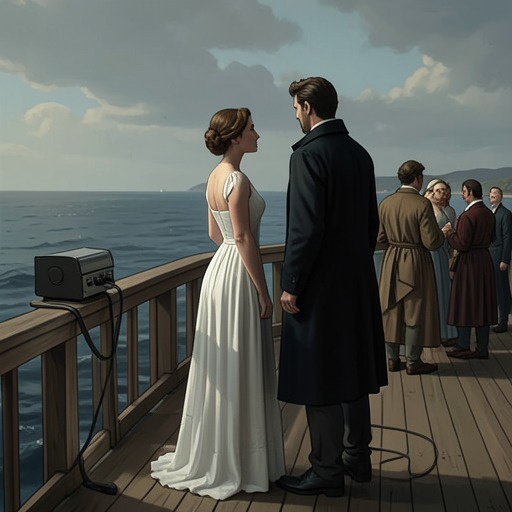
The conversation ends without either person offering a name. As others come onto the deck, the boy doffs his hat and Anna curtseys; then he is gone. Anna turns back to the ocean. The albatrosses’ calls fade beneath the steamer’s deep thrum and the roar of the sea, making their disappearance part of the moment’s close. The scene leaves the birds not as a lasting possession or a confirmed prophecy, but as a vivid image attached to a passing encounter.
That image returns at the pair’s later reunion. When the recognition between them is still tentative, the albatrosses become the first point of reference they can share: Emery names them, and Anna remembers. The exchange joins the present meeting to the earlier one without needing to reconstruct the whole voyage. The birds work as a compact sign of recognition, carrying a memory that the characters can both inhabit.
The Birds as a Beginning
Near the novel’s close, Anna and Emery speak of beginnings, and Emery identifies the albatrosses as his own. The remark gives the earlier scene a second meaning. What was initially a chance encounter on a ship becomes, in retrospect, the start of a personal history. The birds are not simply a general emblem of luck: they mark the moment when two lives first touched, before either person could know what that meeting would mean.
Their recurrence also contrasts the boy’s expansive imagining with Anna’s later act of remembering. At first, he looks outward, toward the albatrosses’ flight and the unknown places they may have crossed; at the reunion, the birds point inward, toward a specific shared past. The novel thus turns a fleeting sight into a durable memory. The albatrosses circle the harbor, vanish into the noise of departure, and return in speech as a name for a beginning that has survived separation.